
All of our practice members are familiar with this device we use to help determine whether or not someone needs an adjustment. Although each individual is scanned on every visit in our practice, someone recently pointed out to me that it seemed a bit mysterious and they really didn’t know why we use it.
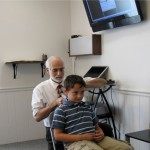
Dr. Brown shown taking a scan along a child’s neck
Actually the reason is as simple as the procedure itself. Taking these skin temperature measurements is a valuable part of the spinal analysis. It safely and comfortably provides objective information about the presence of nerve interference. When an adjustment is performed it is always done for one very important reason, to get rid of nerve interference.
Keep in mind that in the human body all functions are controlled and coordinated by the brain. The brain communicates with the body’s many thousands of different cells, organs and tissues through a delicate network of nerves. Nerves are like a wiring system that links the brain and body. The spinal column is a stack of bones (vertebrae) that protects the nerve system. Here’s how it works: the vertebrae are like movable rings of bone that surround the spinal cord (the spinal cord is the main cable of communication). When this system is doing what it is supposed to, the nerves are well protected and life can be good. But if a vertebra gets out of position, it can’t do what it is supposed to do. Then instead of properly protecting the nerve system, it can insult it. That’s called a subluxation. Nerve interference distorts the messages from the brain, and then the body can’t work properly. If a subluxation is fairly recent, it may not cause any pain, or feel unusual in any way, but it’s always bad.
The problem is that a person can have a subluxation and feel fine, even though the signals from the brain to the body are being distorted. We wouldn’t want someone to go on that way until they finally end up with symptoms weeks, months or even years later. The reason is that damage can be done, even though we’re not hurting. This is why a careful spinal analysis is an important part of healthy living. It’s how we can determine whether or not a person is subluxated without waiting for damage to occur. Another good thing about taking these thermographic measurements is that they are completely safe and comfortable. That sounds sensible enough, but in today’s health care world, there are very few things done that can be called completely safe and comfortable.
We use the thermographic scanner as an objective part of the spinal analysis. The TyTron™ C-5000 is actually a state-of-the-art scientific instrument. With resolution of 1/100 of a 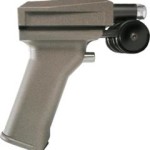 degree and accuracy to within 1/10 degree centigrade, it provides the chiropractor with a reliable measure of paraspinal skin temperature. Research has shown that patterns of skin temperature imbalance are associated with nerve interference http://youneedchiro.com/joomla/publications (Please click on the third article from the top. For links to more studies on thermography see the end of this article). When we look at your scan we’re watching for patterns. If no pattern is present, it’s an indicator of adaptability, which suggests a spine without subluxation causing nerve interference. That’s how taking these measurements help the chiropractor to determine whether or not someone needs an adjustment. By the way, on hot summer days (above 80 degrees) or cool winter days (below 60 degrees), please be sure to arrive at the office at least five or ten minutes prior to your appointment so that you have time to acclimate to our indoor temperature before we take a scan on you. Arriving soon enough to acclimate assures that the most accurate information is being received from your scan.
To read more studies about thermography and its value in detecting nerve interference: https://www.ncbi.nlm.nih.gov/pmc/articles/PMC1978449/
 column.
  We can work with most situations, but a few things do tend to get in the way. Extra-large belts, huge earrings, and stiff corsets come to mind as distractions. Oh, here’s something else – when we do a spinal analysis several things are measured, and one of those is the leg length equality. This is done when a person is face-down on the adjusting table and we look at the feet to compare the leg length. We’re checking to see if they are even, and it is most accurate to measure it with shoes on. That’s because feet are very curvy things, and the shoes give us a nice straight point of reference to measure against. Speaking of shoes, try to wear shoes that won’t fall off when you’re face down on the adjusting table. That would include some kinds of sandals (the kin
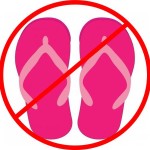 d that don’t have a strap behind the heel) and flip-flops, which tend to fall off easily. We don’t want a person to be clenching their toes to hold on the flip-flops, because it contracts the leg muscles and reduces the accuracy of the leg length equality test.
 Who needs a good nerve supply? Well that one is easy to answer, mothers, fathers, sisters, brothers, sick people, well people, old people and young people all experience a more organized, productive life when they have a good nerve supply.
 This exciting international event will be held at Rock Hill’s BMX Supercross Track located at Riverwalk. Riverwalk is an exciting, fast-growing part of Rock Hill that features one of the world’s finest Supercross tracks, and it also attracts cyclists to family-friendly trails and the Giordana Velodrome. The velodrome is another world-class facility for the Olympic sport of track cycling.

 Nerve interference can be present for long periods of time without causing any obvious symptoms. That’s why we encourage people to use their chiropractic care wisely. For how long? That’s the easiest part to answer. We should continue to receive periodic chiropractic evaluations for as long as we want to function well. Is there ever a time when we really want to experience less than our best? I’ve never encountered a case where someone was too old or too young to benefit from having good nerve supply.

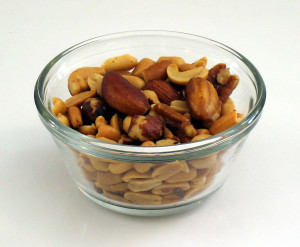 study, “the analysis of all current studies on nut consumption and disease risk has revealed that 20g a day – equivalent to a handful – can cut people’s risk of coronary heart disease by nearly 30 percent, their risk of cancer by 15 percent, and their risk of premature death by 22 percent.”
 For most, I find that people need an extra adjustment just to be able to get by. But that’s what we’re here for, to make the adjustment that restores good nerve supply and makes life better. With that thought in mind, when’s the last time your whole family got their chiropractic check up?